發展心理學筆記-L3
L3 Tools for Exploring the World: Physical, Perceptual, and Motor Development
The Newborn
Reflexes 反射
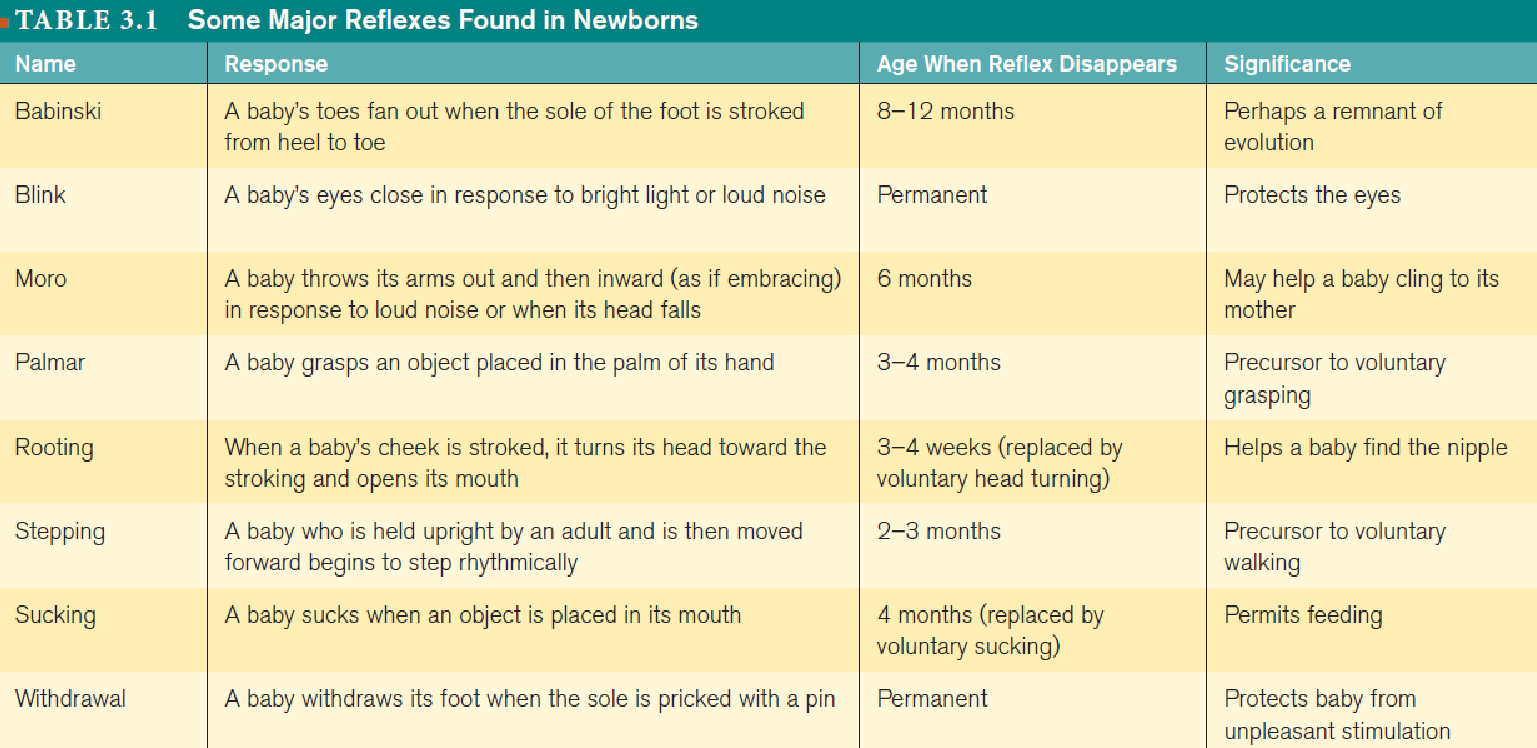
Neonatal Behavioral Assessment Scale (NBAS)
新生兒行為評估量表。
- Used with newborns to 24-month-olds
- Provides a detailed picture of the baby’s behavior
- Includes 28 behavior items and 18 reflex test
- Evaluates functioning of four systems:
- Autonomic
- Motor
- State
- Social
The Newborn’s States
Newborns alternate among four states:
- Alert inactiviy
- 平靜,眼睛睜開,觀察周圍環境
- Waking activity
- 眼睛睜開但無法對焦,伴隨不規則的動作
- Crying
- 劇烈哭泣,伴隨激動的動作
- Sleeping
- 眼睛閉合,有時靜止且呼吸規律;有時輕微移動且呼吸不規則
Newborn’s cry
- Basic cry
- 起初柔和漸進,隨後變得更強烈
- 通常發生在嬰兒感到疲倦或飢餓時
- Mad cry
- 更為強烈的
Basic cry
- 更為強烈的
- Pain cry
- 突然長時間大聲哭泣,接著出現長時間的停頓和急促喘氣
Newborn’s sleep
- Newborns sleep
16-18 hoursa day- 睡眠與清醒的循環為三小時睡眠、一小時清醒,維持一整天。
- 約
6個月後開始可整晚睡眠 (10-12小時) - 新生兒的睡眠有一半屬於 irregular/rapid-eye movement (REM 快速動眼期)
- Sudden infant death syndrome (SIDS) 嬰兒猝死症候群
- 風險因素:
- 2~4個月
- 早產或過輕
- 父母抽菸
- 趴睡
- 蓋太多毯子
- 容易過熱
- 風險因素:
Temperament 氣質
A consistent style or pattern of behavior that related to personality later in life (影響之後的性格)
Three dimension:
- Surgency/extroversion 突發性/外向性
- is infant generally
happy, active, and vocal? 是否快樂、活躍、發聲
- is infant generally
- Negative affect 負向情感
- angry, fearful, shy; not easily sooth
- Effortful control 主動控制
- can focus attention; not readily distracted; can inhibit responses
- 可以保持專注並且自我調節
What factors can affect temperament?
- Heredity 遺傳
- 雙胞胎的氣質相近
Negative affect更容易受遺傳影響
- Environment 環境
- 母親的抑鬱會導致嬰兒容易感到恐懼
- 不同的文化會使嬰兒的氣質不同
Physical Development
略過
Moving and Grasping:Early Motor Skills
Moving and Grasping
- Motor skills 運動技能
- coordinated movements of the muscles and limbs 肌肉與四肢協調
- Infants learn to move about in the world
- Fine motor skill 精細運動技能
- associated with
grasping, holding, and manipulatingobjects 抓臥並操作物體 - Feeding (拿取瓶子、器皿等) is a fine motor skill
- associated with
Coming to Know the World: Perception
Smelling, Tasting, Touching, and Hearing
- Infants have a keen sense of smell
- Recognize familiar smell (ex:母親)
- 對氣味有反應 (ex:甜味->正向,腐爛的蛋->負面)
- Can differentiate among different tastes
- Prefer
sweet tastesand do not like sour or bitter ones
- Prefer
- Sensitive to touch
- Elicit specific behaviors (increased heart rate, cry, etc.) in response to pain
- Infants best hear sounds in the range of human speech
- 四五個月的嬰兒對自己的名字有反應,並且可以區分母音與子音
Seeing
- Newborns’ and young babies’ vision is much worse than an adult’s
- Fully develops by
age one
- Fully develops by
- At
three months, babies can see thefull range of colors - Even newborns readily recognize face
- 更容易辨別該族群的人的面孔
Becoming Self-Aware
Origins of Self-Concept
- Self-awareness emerges between
18-24 month- Use of own name or personal pronouns 使用自己的名字/代詞
- Knowledge of age and gender 對年紀與性別有認知
Theory of Mind 心智理論
a naive understanding of the relations between mind and behavior
- Intentionality 意向性
- 心靈代表或呈現事物、屬性或狀態的能力
One-year-oldsunderstand intentionality
- Theory of mind
- 推論他人心智狀態的能力
- develops
between ages two and five
- behavior is a result on one’s beliefs
- Around
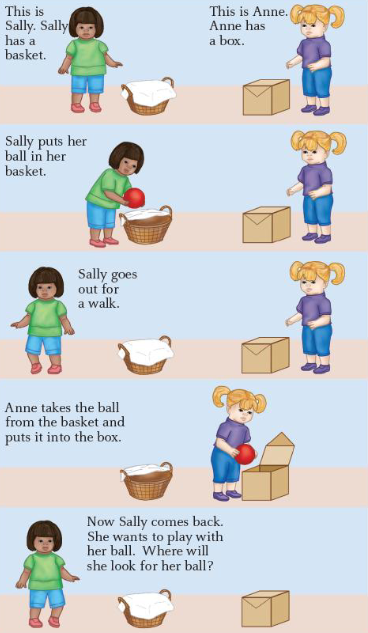
age four, children understand that behavior is a result on one’s beliefs, even when beliefs are wrong
- Around
- Language skills or interactions with other people 語言以及與他人的互動
- may lead to the theory of mind
false-belief task: