電腦安全-L2
Confidentiality with Symmetric Encryption
Symmetric encryption
- 提供傳輸中或儲存資料的
confidentiality(機密性) - 又稱為
Conventional encryptionorsingle-key encryption - 安全條件:
- 強大的加密演算法
- 在已知部分對應組合 (plaintext–ciphertext pairs) 以及演算法的情況下,仍無法解出明文 (ciphertext) 或是 金鑰 (key)
- 安全的金鑰分發與管理
- 強大的加密演算法
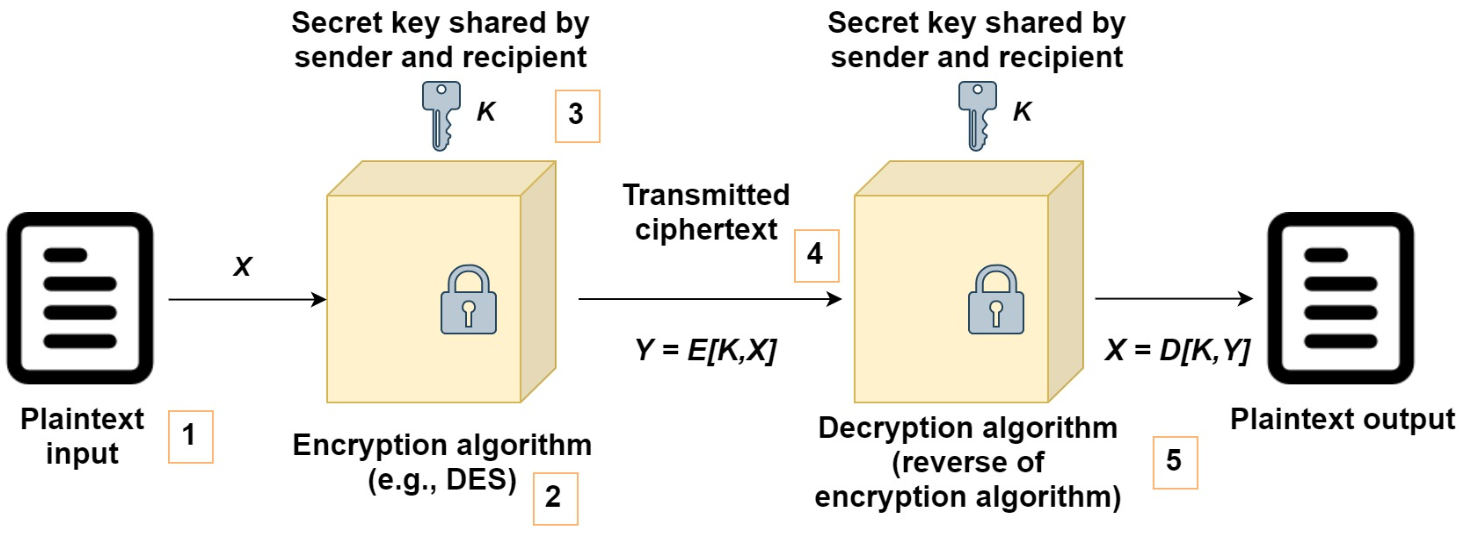
- Model (Five major components)
Attacking Symmetric Encryption
-
Cryptanalytic Attacks
- 利用:
演算法本身的特性明文的一般特性- 一些明文與密文的
對應樣本(plaintext–ciphertext pairs)
- 推導出特定的明文或加密金鑰
- 利用:
-
Brute-Force Attacks
- 利用:
- 對可能明文的了解
- 對某些密文嘗試所有可能的金鑰
- 直到產生可理解的明文
- 平均需要嘗試所有可能金鑰的
一半
- 利用:
Symmetric Block Encryption Algorithms
最常見的對稱式加密方式
- 將固定大小的明文區塊 (plaintext blocks) 轉為相同大小的密文區塊 (ciphertext blocks)
Data Encryption Standard (DES)
Adopted in 1977 by the NIST (FIPS PUB 46)
- 曾經是最廣泛使用的加密方案,又稱為 Data Encryption Algorithm (DEA)
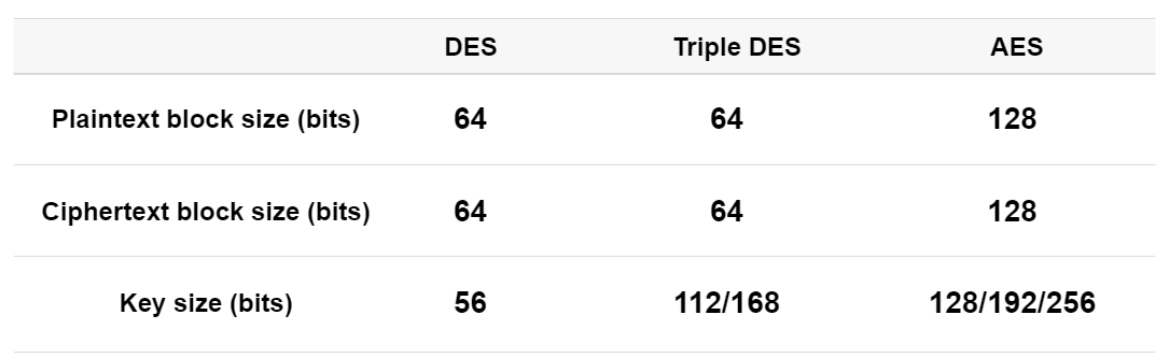
- 64-bit 明文區塊 / 56-bit 金鑰 → 64-bit 密文區塊
- 安全性問題:
56 bit金鑰太短- 在今天的處理器速度下不足以抵抗暴力破解
Triple DES (3DES)
Part of the DES in 1999: FIPS PUB 46-3
- 將 DES 演算法重複執行 3 次,並使用 2 or 3 把不同的金鑰
- 金鑰長度
112 or 168 bits - 優點:
- 金鑰長度足夠抵抗暴力破解 (168-bit)
- 直接使用 DES 的結構,可以沿用原有的硬體或系統
- 缺點:
速度慢(需要執行三次 DES)- 區塊大小只有 64 bit,效率低且安全性不足
Advanced Encryption Standard (AES)
NIST Selected Rijndael Algorithm in Nov. 2001: published as FIPS 197
- 現在已被廣泛應用在商業產品中
- 作為 3DES 的替代方案 (3DES 不適合長期使用)
統整
- 實務上的安全問題
- 如何將對稱式加密應用到大於單一區塊的資料
Other Encryption Algorithms
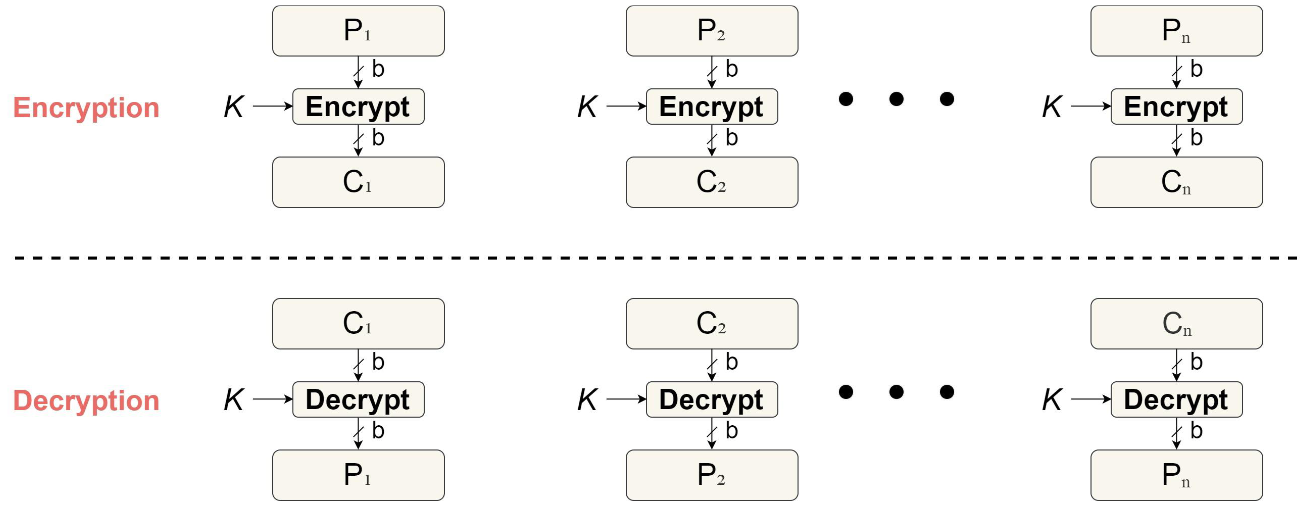
Electronic codebook (ECB)
解決之前提到的問題
- Multiple block encryption
- 每個區塊使用
相同的金鑰加密 - 安全問題: 可能會產生規律
Cipher Block Chaining (CBC)
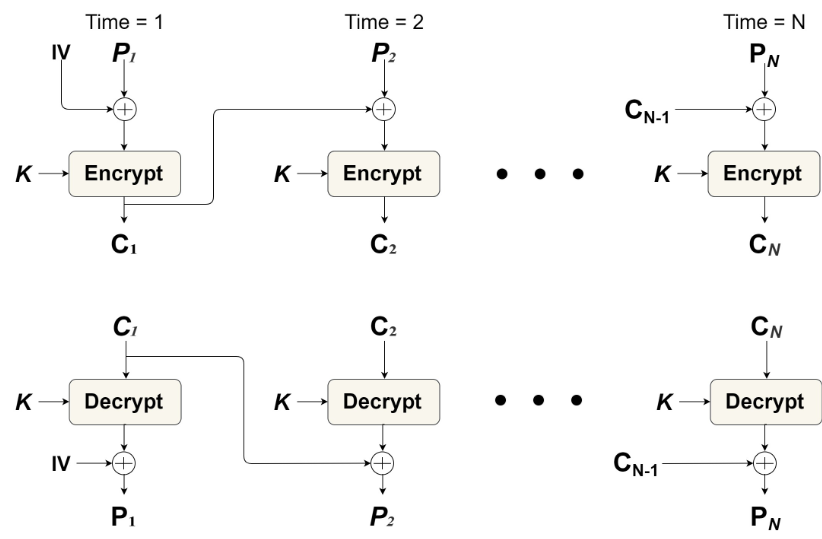
解決 ECB 的問題
- Five modes of operation defined by NIST
- ECB, CBC,…
Stream Cipher
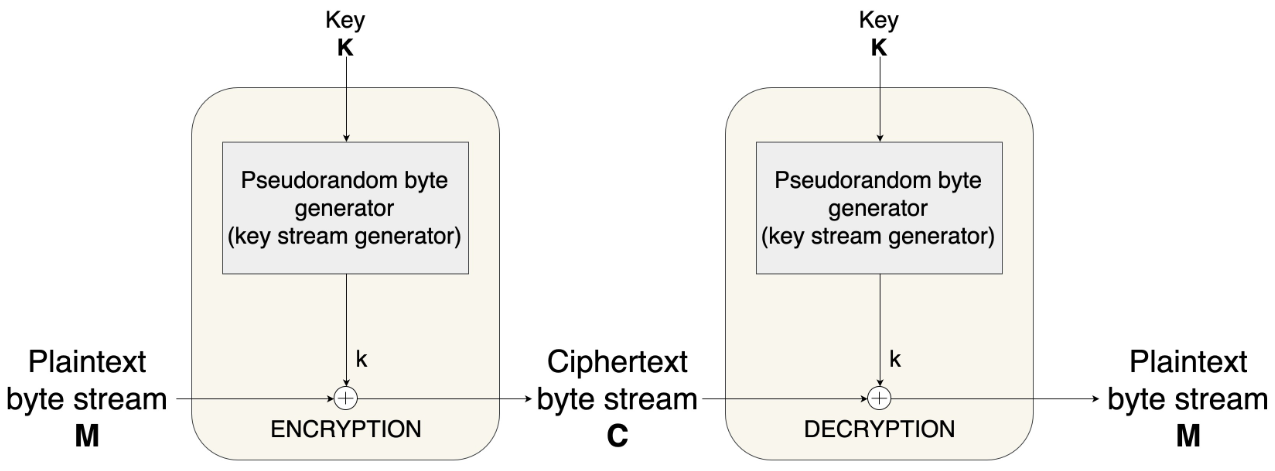
- 比較
| 特性 | Block Cipher | Stream Cipher |
|---|---|---|
| 處理方式 | 一次一個 block | 連續處理 |
| 單位 | 固定大小 (64 / 128 bit) | bit / byte |
| 優點 | 金鑰可重複使用 | 速度快 (XOR 運算) |
| 應用 | 檔案、資料庫 | 即時通訊 |
Message Authentication and Hash Functions
- Message (data) authentication
- 通信雙方可以確認收到或儲存的訊息是真實的 (authentic)
- 防止資料或交易被偽造
- 驗證的主要面向
- Message contents:
沒有被修改 - Message source:
authentic
- Message contents:
- 其他面向
- Message timeliness/sequence: 確保訊息沒有被
延遲或重播
- Message timeliness/sequence: 確保訊息沒有被
Message Authentication without Encryption
- 訊息驗證是獨立於訊息加密的功能
- ex: 廣播訊息給多個接收者
- 不是所有接收者都能解密訊息
- 如果使用加密,會浪費處理器資源
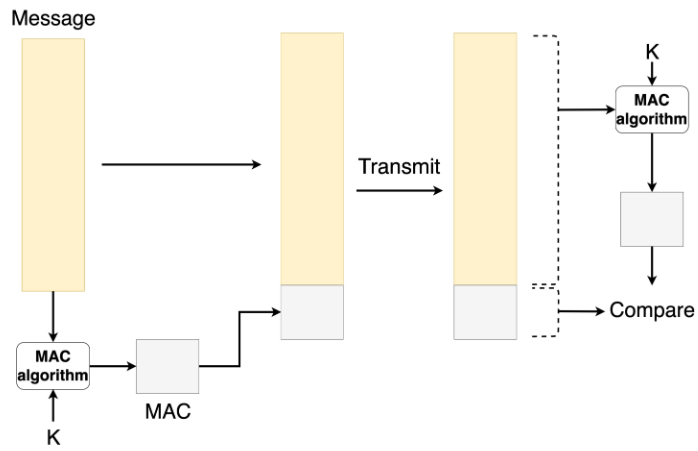
- 為每個訊息生成並附加
驗證標籤(auth. tag)- Message Authentication Code (MAC)
- One-Way Hash Function
MAC
- 假設兩個通信方共享同一個秘密金鑰
- 使用秘密金鑰生成一個小區塊的資料
- MAC 演算法:
- NIST 推薦
DES - 將訊息加密後取
最後 16 或 32 bit作為驗證碼
- NIST 推薦
- 缺點:
- 加密軟體速度慢
- 加密硬體成本不可忽略
- 加密硬體對大資料量較優化
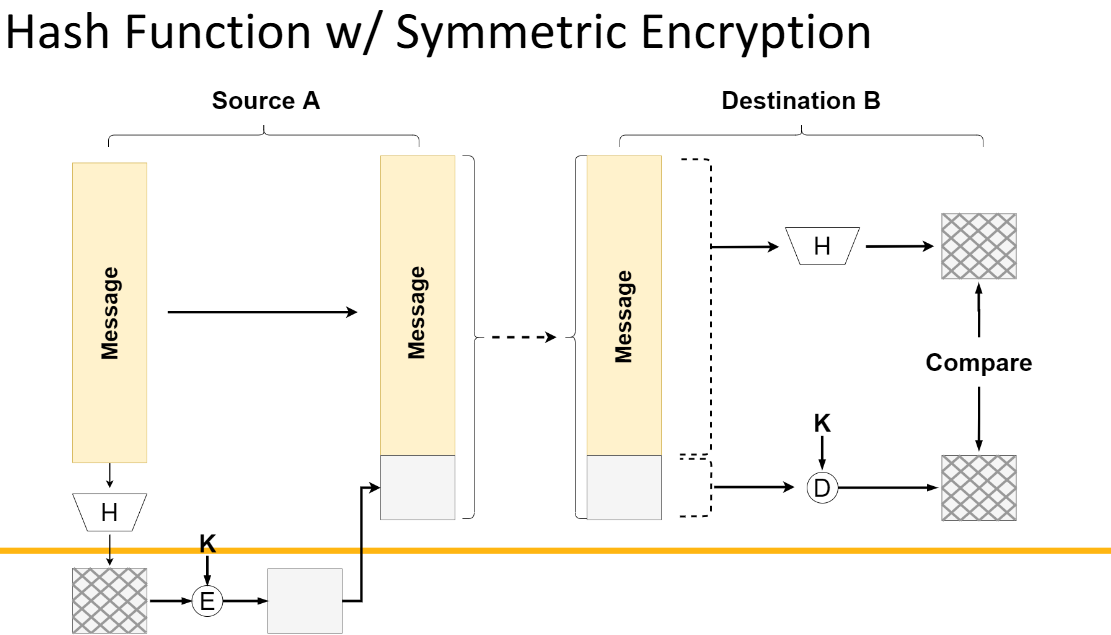
- 驗證 (Authentication) 不需要可逆 (reversible)
- 只需要一種方法產生 tag,並讓接收方可以驗證
One-way Hash Function
- 將任意大小的訊息 轉為固定大小的 Tag
- 與 MAC 的差異:
- 不需要使用秘密金鑰
- 函數 的特性:
- 可以應用於任意大小的資料區塊
- 輸出長度固定
- 計算容易: 使得硬體與軟體實作都可行
- One-way (pre-image resistant)
- 給定雜湊值 ,幾乎不可能找到 使
- Second pre-image (weak collision) resistant
- 對於輸入 ,幾乎不可能找到 使
- Collision (strong collision) resistant
- 幾乎不可能找到兩個不同輸入 使
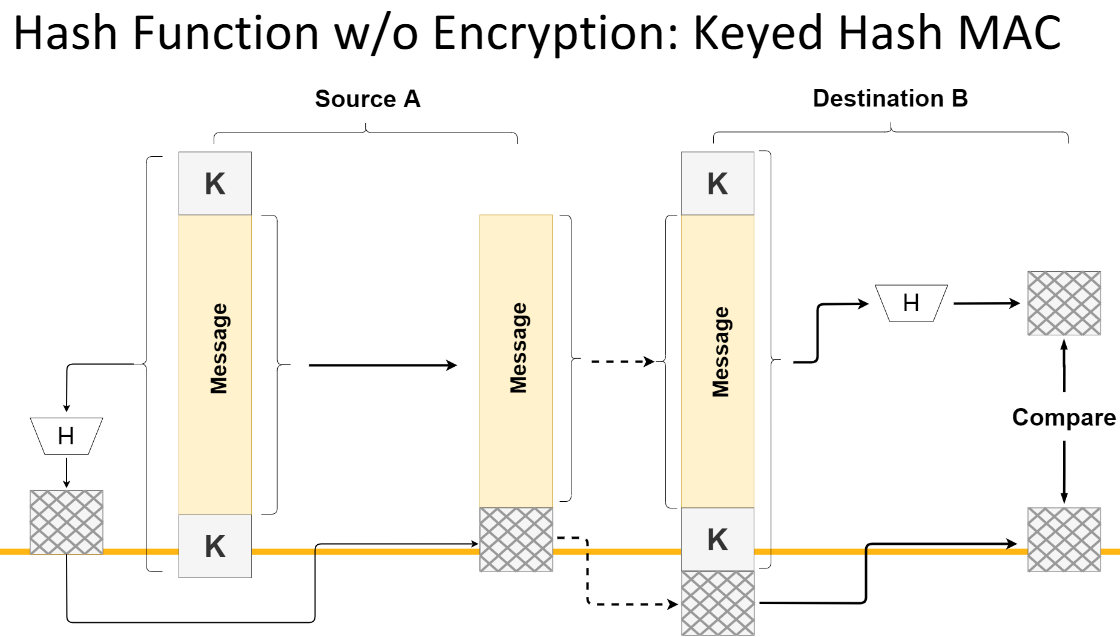
Security of Hash Functions
- 攻擊方法
- Cryptanalysis
- 利用演算法的邏輯弱點,成功與否取決於演算法本身
- Brute-force
- 僅取決於 hash code 長度
- Cryptanalysis
- 對暴力破解的安全強度
- Preimage resistant:
- Second preimage resistant:
- Collision resistant:
Birthday attackon a message digest of size n produces a collision
- 應用:
- 訊息驗證
- 數位簽章
- 密碼儲存
- 入侵偵測
Public-Key Encryption
Proposed by Diffie and Hellman in 1976
Asymmetric algorithm(非對稱)- 基於數學函數
- 與在位元模式上做簡單運算的
Symmetric algorithms不同
- 與在位元模式上做簡單運算的
- 常見誤解
- 比對稱加密更安全
- 是一種通用技術,可以取代對稱加密
- 金鑰分配容易
- 使用公鑰加密: 用於保密性 (
Confidentiality) - 使用私鑰加密: 用於驗證身份與完整性 (
Authentication&Integrity)
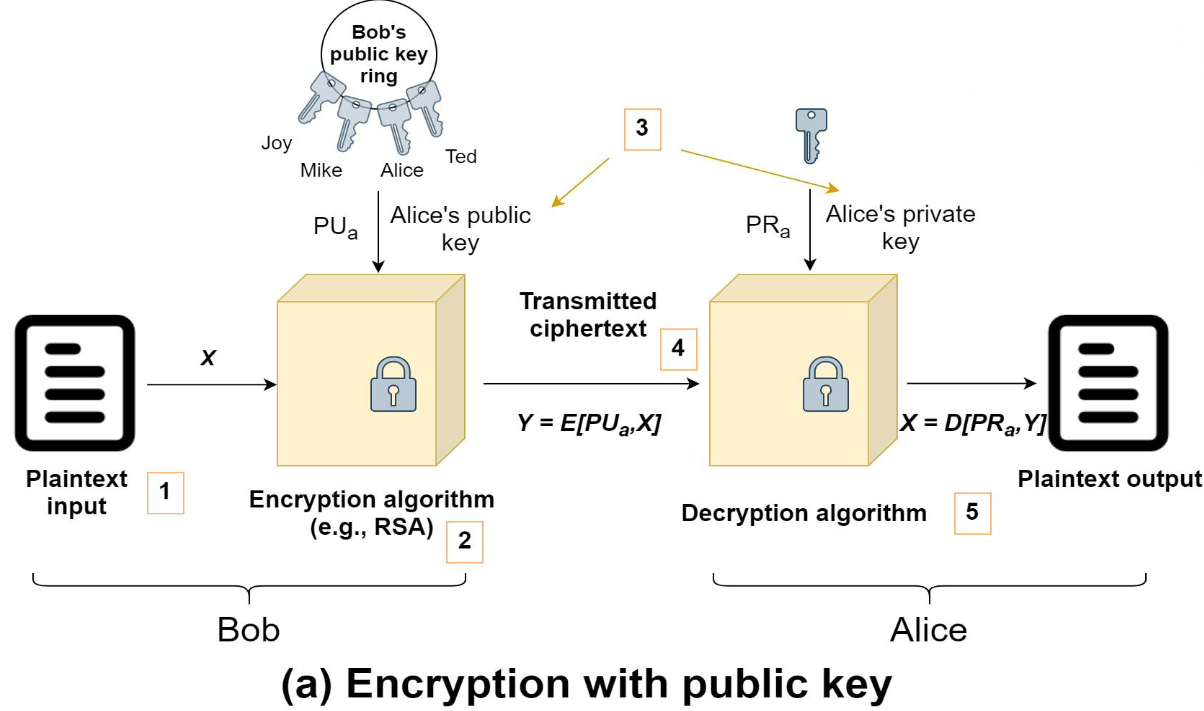
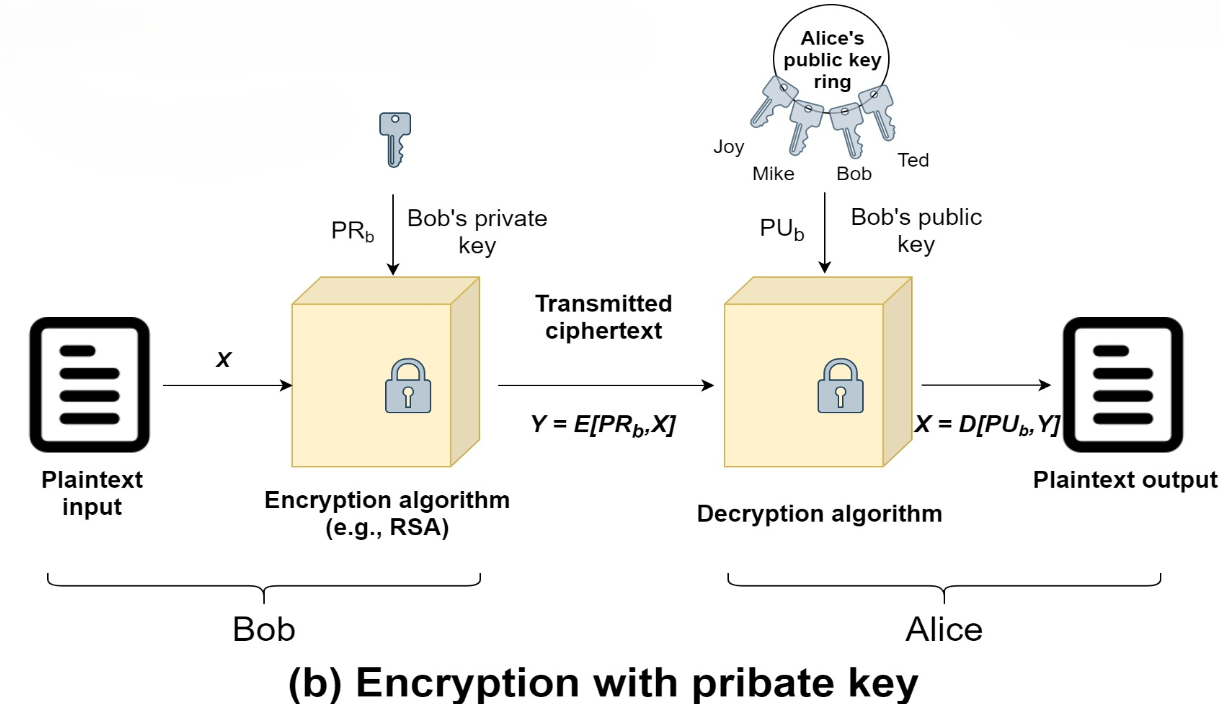
- 要求
- 計算上容易
- Create key pairs
- for sender knowing public key to encrypt messages
- for receiver knowing private key to decrypt ciphertext
- 對攻擊者計算上不可行,即使攻擊者知道公鑰,也無法:
- 推算出私鑰
- 還原訊息
- 任意一把金鑰都可用於加密
- 計算上容易
Digital Signatures and Key Management
Digital Signatures
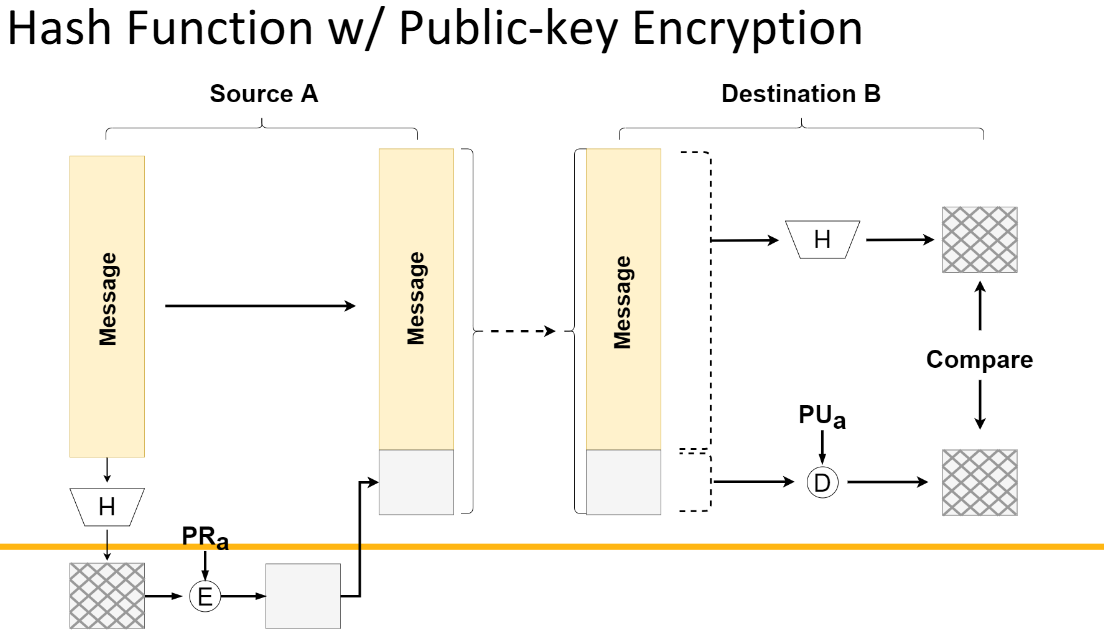
- 將雜湊值 (hash code) 用私鑰加密
- 目標:
- 驗證訊息來源 (
Authentication) - 確保訊息完整性 (
Integrity) - 防止訊息被否認 (
Non-repudiation)
- 驗證訊息來源 (
不提供機密性(Confidentiality)
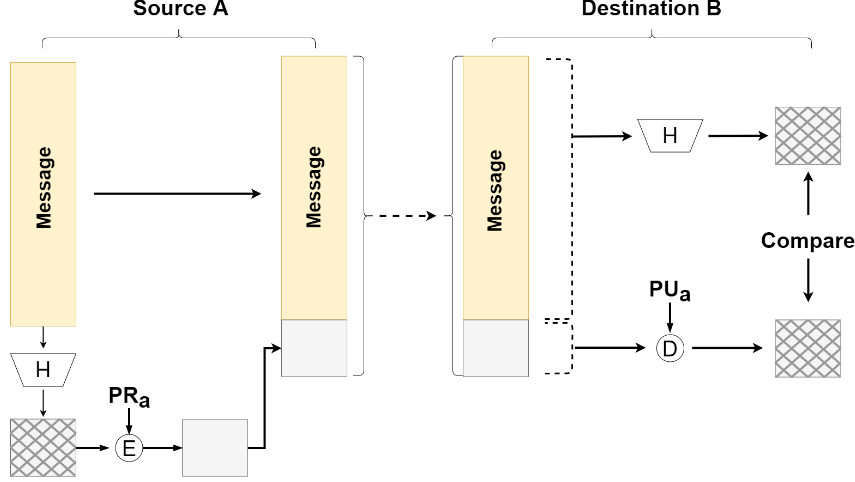
Public-key Certificates
Secure distribution of public keys
- Public key distribution
- 任何人都可以發布自己的公鑰
- 安全風險: 可能會有偽造的情況
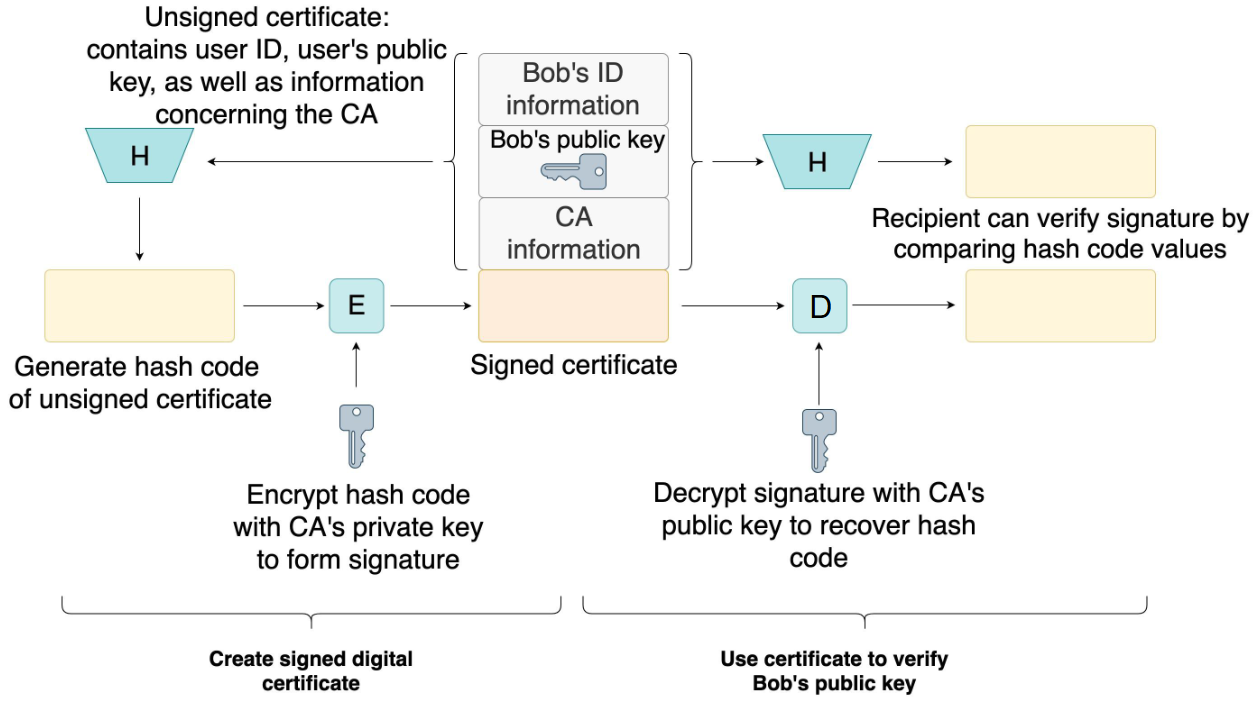
- Solution: Public-key certificate
- Certificate:
Public key+user ID of the key owner - 憑證由受信任第三方簽署:
CA(Certificate Authority) - 憑證包含
CA 資訊以及有效期限
- Certificate:
- X.509 標準: 全球通用的憑證標準
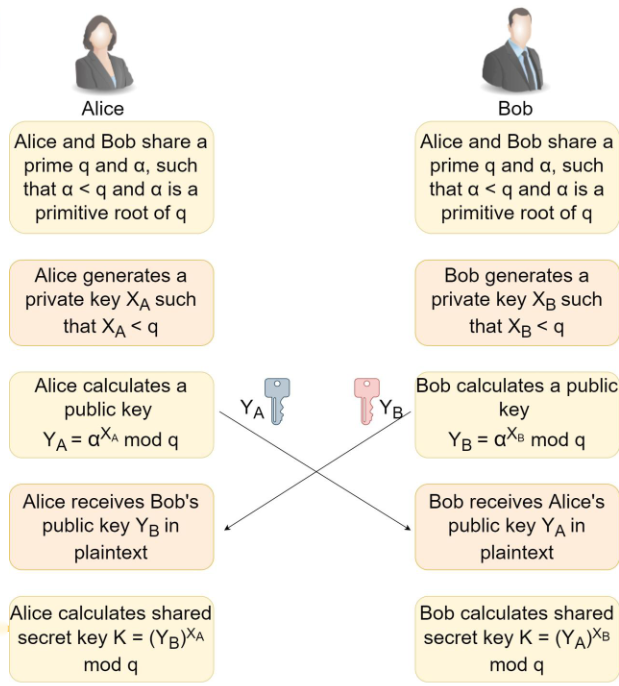
Symmetric key exchange
Diffie-Hellmankey exchange- 缺點:
- 無法驗證通訊雙方身份
- 提出許多變體來解決此問題
- 缺點:
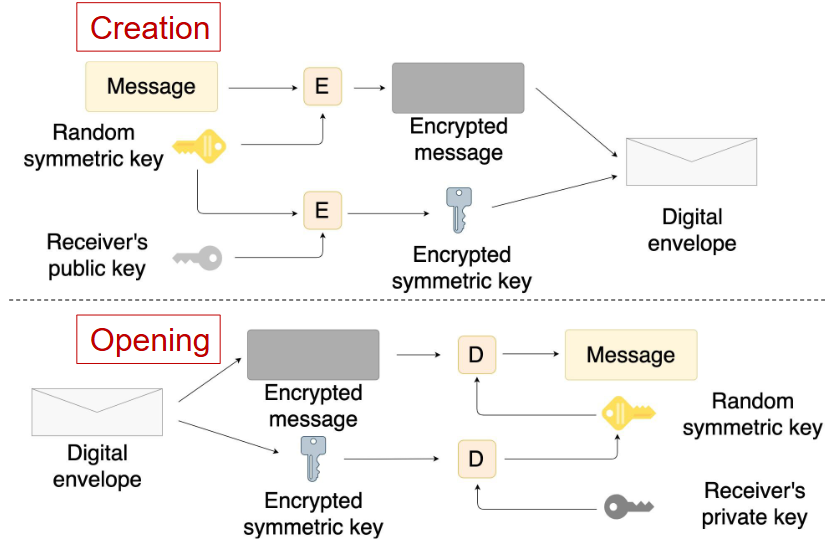
Digital envelopes
distribution of secret keys
- 保護訊息,但發送者與接收者
不用共享相同金鑰 - 也可用來傳送
對稱金鑰
Random and Pseudorandom Numbers
Random Numbers
- 用於產生:
- Keys for
public-key algorithms - Stream keys for
symmetric stream cipher Symmetric keys…
- Keys for
- 要求:
Randomness(Statistical Properties)- Uniform distribution: 每個數字出現頻率大致相同
Unpredictability(Cryptographic Security)- 序列中下一個數字無法被預測
Random vs. Pseudorandom
Pseudorandom: 廣泛被接受- 使用確定性演算法 (
Deterministic algorithm) 生成 - 不是真正隨機,但可以
通過統計隨機性測試
- 使用確定性演算法 (
Random: true random number generator (TRNG)- 使用
非確定性來源生成隨機數 - 大多透過測量不可預測的自然現象
- ex: 輻射、氣體放電…
- 越來越多現代晶片提供
- 使用